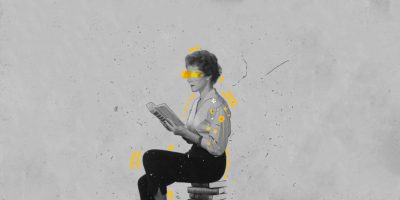
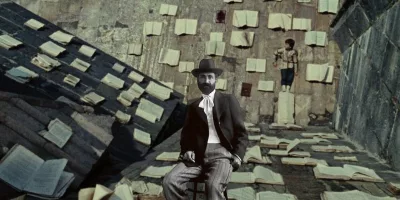
For some, this might come off as something particularly shocking, as to how this question exists in the first place. But there is such a thing, a very unfortunate one: performative reading, it’s called. A very contrasting adjective for such an activity, don’t you agree? It has earned its name, as Gen Z is officially proclaiming reading as a performance.
“Performative reading — an internet-driven trend where individuals read physical books in public or post about them online, specifically to signal intelligence, taste, or a high-attention span to others. It treats books as accessories to curate a specific intellectual image, often focusing on classics.” (Google)
An accessory. A specific intellectual image. What is this? Is this really what we have become?
Now here is my own statement for it, a slight contrast to one of Google’s.
“Performative reading distorts genuine love for literature — it reduces a need for knowledge to an aesthetic, and in doing so, casts suspicion on every visible reader, not just those performing.”
Well, to answer dozens of arising questions, how about we do a close reading? But first of all, let’s give this little rant a character. A character named Eduard. Let’s now dive into Eduard’s story.
Eduard loves to read. But “love” is probably a weak verb for the feelings that he has toward literature, so here is an excerpt from Emily Dickinson’s poem (let’s say his favorite poem):
He ate and drank the precious words,
His spirit grew robust;
He knew no more that he was poor,
Nor that his frame was dust.
He danced along the dingy days,
And this bequest of wings
Was but a book. What liberty
A loosened spirit brings!
(Dickinson, 1890/1896)
Dickinson’s “bequest of wings” is exactly what Eduard feels each time he steps into the library, as he moves among the shelves. And, with such a strong love, Eduard spends hours choosing his next book, as he runs his fingers along the spines, forcing dust to rise from the shelves. Then, he sees it.
He stops with an awed expression in front of one of the aisles, as he sees a title which he has heard so many good things about. Which he came for: The Count of Monte Cristo. Eduard takes his new book to the librarian for checkout. He can’t wait to dive into the exciting story.
Excitement overflows the young soul, and as he sits alone on the bus, he can’t help himself. He takes his new company out of the backpack and starts turning pages.
But there happen to be smirks, surrounding him.
And how did it all get worse? If Eduard had wondered about the cause of the smirks, and if I were a friend of his, I would probably suggest he go wander through the internet — BookTok, specifically. And to the question “what is BookTok?” I would answer simply: “It’s an aesthetic! Book hauls, book vlogs, collections and several copies of The Count of Monte Cristo in different editions!” And he would then simply ask: “Why?”
And with great sorrow I would throw light upon our former phrase — “performative reading.” “But I was never doing this for the aesthetic!” he would proclaim, and I would only shrug, for I was just the informer of the matter. Though some doubts would inhabit his heart — and would I be able to assure him of the absurdity of it? How I would love to offer a simple solution, but mass media is a collective voice that lingers in Eduard’s head like an echo, one which I doubt the minority could overscream.
How easy it would be for Eduard to just read, without being labeled, without being compared, without all the difficult things which follow this newly created problem.
Irony aside, is it really funny? Rather sad that this “phenomenon” has to be discussed.
Let’s be honest here, Eduard is not just a character for my narration. Eduard is an embodiment of every reader existing on this Earth.
How many people are just like Eduard, who have a strong desire for knowledge, an eagerness for new information, but are held back by a mere thought that it might look… performative?
Eduard closes the book, gets off the bus, and the next time The Count of Monte Cristo acts on the stage is when Eduard opens the book at home only, depriving himself of the joy of nurturing his hungry soul, reading only when he feels “safe.” Or, who knows, he might not care about others’ opinions.
But why risk breaking something so sacred in the first place? Why label or shame when there’s nothing to be ashamed of? Quite the opposite — something to be proud of.
How many “Eduards” would the world see if there were no such label as “performative reading”? I’d say twice as many as it is now.
How many loosened spirits. How many dancers along the dingy days would there be then. How many souls nourished, how many imaginations set free, if reading were no longer a performance but a joy.
And now Eduard thinks he’s either performative or not aesthetic enough to read about Graf Cristo. Poor Eduard. And poor Cristo!
Just imagine.