
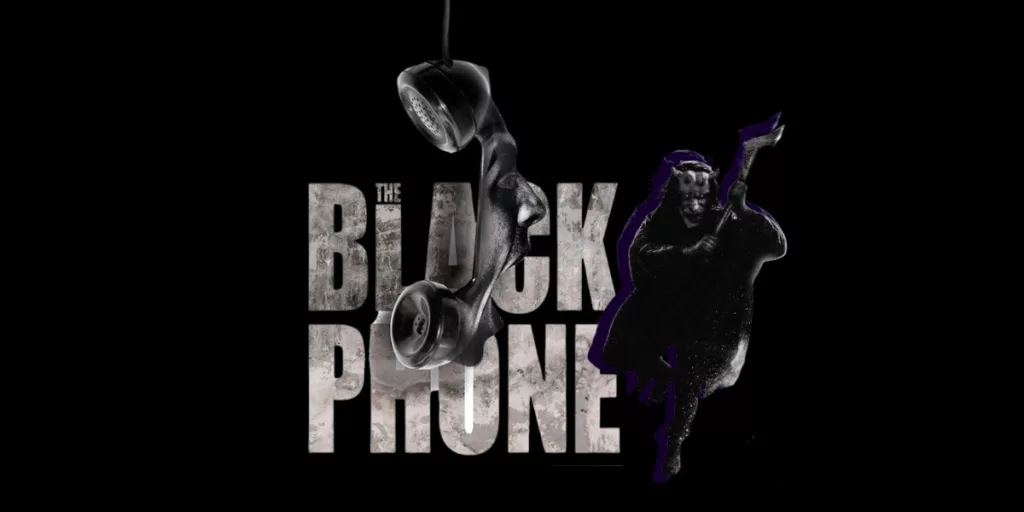
Scott Derrickson’s sequel “Black Phone 2” (2025) constructs a chilling narrative that forces us as the audience to relive aftermaths of survival. Building on the emotional and supernatural themes of its predecessor, the film intertwines grief and fear with a sense of psychological unease. It stands as one of the most emotionally charged horror sequels of the year, focusing less on the terror of the present and more on the terror of the past.
The story follows Finney and Gwen Shaw (played by Mason Thames and Madeleine McGraw respectively) years after their escape from the masked predator known as the Grabber (played by Ethan Hawke). In “The Black Phone” (2021), their trauma was confined in a dark basement, a phone and ghosts of murdered children trying to help Finney break free.
“Black Phone 2” shows that aftermaths of the horrible events can be just as frightening. Finney and Gwen are physically safe, but the black rotary phone still rings. But now it only rings in their dreams, and they need to save three young boys at the Alpine Lake winter camp miles and miles away.
Thames and McGraw convincingly play the roles of adults still wrestling with childhood trauma, and their performances are grounded and authentic. But Hawke’s portrayal of the Grabber is the standout. His presence alone carries the sequel and makes its moments of fear and tension truly memorable, especially during the dream sequences, shot on a “Super 8” film. It was a strategic directorial choice by Derrickson that gives these dreams an even more vulnerable feel.
Hawke’s Grabber in “Black Phone 2” takes on a Freddy Krueger-like quality, much like the nightmares in “A Nightmare on Elm Street” (1984), where danger does not need to exist in the real world to be terrifying. He no longer has to be physically around to instill fear, and this is what makes “Black Phone 2” a far better horror film than the first. The original thrives on immediate, physical danger, while the sequel examines the anxiety that follows upon surviving trauma. These are horrors that resonate universally, even if our own trauma is not as extreme as being trapped by a killer.
Visually speaking, Derrickson leans heavily into a surreal and suffocating aesthetic. Shadows everywhere, spaces feel slightly off-kilter and realities often feel distorted – all techniques he has perfected in previous films like “Sinister” (2012). Wide shots in particular are used in a clever manner here, leaving negative space that, despite minimal visuals on screen, creates a suffocating feeling because the audience senses an invisible (possible) danger. At one point, Derrickson includes a scene where Gwen is dragged through the camp kitchen. It feels like a small Easter egg for genre lovers as a clear homage to Tina’s iconic death in “A Nightmare on Elm Street,” with the camp ovens referencing Freddy’s boiler room as she’s thrown around by an unseen force.
While “Black Phone 2” excels in its technicalities and performances, the script is one of its weaker elements. Derrickson and Cargill’s story is serviceable but often predictable, with much of the runtime outside the dream sequences feeling uneven. Gwen’s character in particular was written with little to no depth, making it difficult for us as viewers to invest or care for her. On top of that, for a horror movie, it is quite surprising how few real consequences there are and how not a single character was killed off. This all makes the film feel a lot safer than it should be, and it might leave many horror lovers unsatisfied.
That said, even with the script’s shortcomings, “Black Phone 2” shines in its setting by offering a fresh take on familiar horror tropes. Derrickson inverts the classic summer camp slasher template (such as “Friday the 13th” (1980), “The Burning” (1981), and more recently “Fear Street Part Two: 1978” (2021). Instead, he situates the story in the wintery Alpine Lake camp where the snow creates a sense of isolation reminiscent of the Overlook Hotel in Stanley Kubrick’s adaptation of “The Shining” (1980) by Stephen King. This unfamiliar and fresh take on the environment immediately demands attention because the inversion of the typical summer camp setting upends the rules that usually come with such setting.
Ultimately, “Black Phone 2” may stumble in its writing, but it succeeds where it matters most, in atmosphere, performance, and emotional weight. Derrickson proves once again that horror does not necessarily need endless gore or jump scares to be effective.“Black Phone 2” becomes a rare sequel in a genre crowded with formulaic reboots. If you are a fan of horror classics, and appreciate a little psychological thriller, this sequel is absolutely worth it!